The post Curating a Beautiful Home with Pre-loved Treasures appeared first on Hosting With Heart.
]]>Australia’s obsession with interiors comes at a cost. A recent furniture rubbish survey found the Greater Sydney region can generate as much as 48,000 tonnes of furniture waste yearly – covering both soft furnishings and hard furniture.
Team that up with waste from packaging, carbon from freight, rising inflation and supply chain delays, and we’ve got an expensive, wasteful habit that requires a lot of patience before that fancy new sofa arrives.
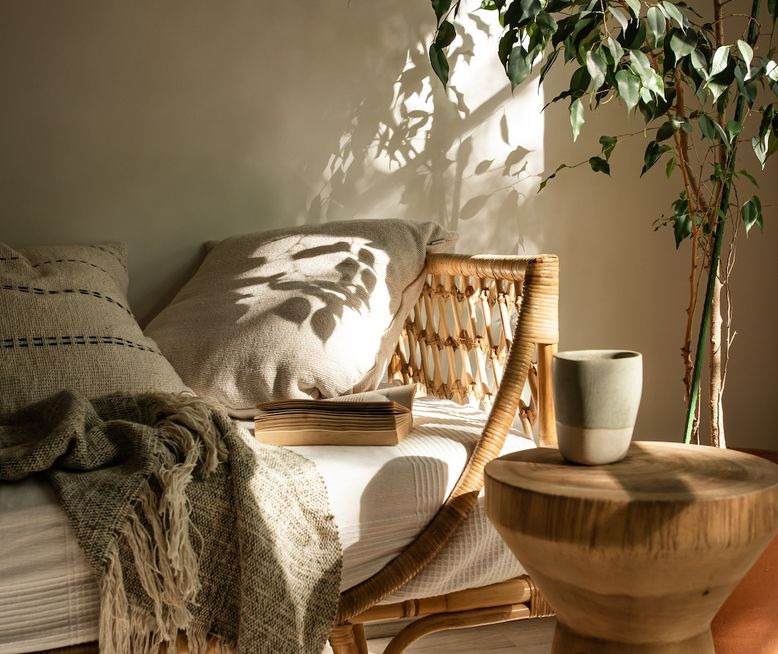
Second-hand is sexy, for so many reasons:
-
- It’s sustainable: no packaging. No freight. No waste. No landfill.
-
- It’s affordable: as a rule of thumb, for quality pieces, pay at most half the cost of the same item new in-store.
-
- It’s convenient. Don’t wait three months for a new chair and then decide it’s not right for the space. With online marketplaces, it’s never been easier to find just the thing you need – and so often, it’s just around the corner, and you can pop over and pick it up tonight.
-
- If you stuff up and buy the wrong thing, you can just put it on the market again, straight away. Take a good picture, and sell it at a profit 😉
-
- It’s timeless. Think about it: if you waltz into the shops and kit your home out with all the latest and greatest from 2023, your home will always look like it came from 2023. BUT if you curate it using a mix of vintage and modern finds you’ll have a storied home, full of character that lasts the test of time.

For our hosted home, called The Kindred, Canberra, we wanted to prove what’s possible when you buy nothing new. Everything there, except the bedding and towels, is either preloved or hand made. Every spoon, chair, shelf, tap, hook, rug and coat hanger. It’s the third home we’ve furnished this way, and here’s what we’ve learned:
- Decide on a style and colour palette that’s inspired by your home and its surroundings. You will be tempted by bargains that don’t match your style. Let them go: a cohesive look will elevate your space.
- Great preloved markets include facebook marketplace, gumtree, online vintage sellers, local buy/sell/swap groups, council clean-ups, tip shops and second hand shops.
- Make sure you ask for measurements if they’re not on the listing, and check carefully for any evidence or mention of damage. Don’t discount it if something’s beautiful but broken. Youtube is great for fix-it tutorials, and if you’re still not sure, take it to your local men’s shed and they’ll fix it for a song.
- The second hand market is generally very quick, so it helps to be on the ball. Create alerts for things you need and be specific: for example, “outdoor timber daybed” within a certain radius. You’ll be the first to know when the right thing pops up.
- If you find a vendor selling things you love, check what else they have listed. You can also follow vendors on facebook marketplace to be alerted of new listings. I follow some stylists in Sydney who sell homewares they use in shoots. I also found and follow some people who work in the warehouse of designer furniture stores, and list their floor stock or samples. They often won’t divulge the brand to keep people buying full-price from the store. In this case it helps to know what you’re looking at to recognise the brand and understand the value, but if you don’t, you can try a reverse google image search.
- On haggling: go for it, but know that you risk losing it to someone else. Check how many folks have saved the item first. Generally, items like bed frames and sofas are great for a bargain as people need to clear them out before they receive a new one. Quality armchairs, outdoor teak furniture and classic dining chairs are rarer. Pounce on these, and don’t bother haggling.
- If something is very popular, or even if someone else has just said they want to buy it, don’t be afraid to offer a bit more than the asking price. Until the item’s been picked up, you’re still in with a chance as buyers can be no-shows. Also offer to pay a deposit and to pick things up quickly.
- For hard-to-find items, enlist the help of family and friends in different cities to broaden your search.
- Online auction houses like Lawsons or Davidson Auctions are brilliant for preloved original art and quality kitchenware. They often represent folks offloading an entire household worth of goods from wealthy collectors. You can kit out an entire kitchen, and can find some incredible artworks for a song – it beats buying mass-produced prints that you’ll see popping up everywhere, and helps create a high-end look.
- If you can, concentrate your searches on higher density, affluent suburbs: this goes for both online marketplaces and council clean-ups. If you’re far away from a big city, a buying trip can be a good investment. Hire a trailer, line up purchases to pick up in a single day (pay a deposit to the vendor so they’re happy to hold it), and make a day of it.
Good luck hunting. To find out more about The Kindred, follow us on Instagram at @thekindred_canberra, or visit our Hosting with Heart listing.
The post Curating a Beautiful Home with Pre-loved Treasures appeared first on Hosting With Heart.
]]>The post Why Sustainable Tourism? appeared first on Hosting With Heart.
]]>From bushfires to floods and damaging storms, we are already experiencing the devastating consequences of climate change. This has been a wake-up call for everyone, from individuals to whole industries. And like other sectors of the economy, the travel industry needs to do its part.
But are our guests on board? Do they consider sustainability when they book a holiday? Evidence suggests that they do – increasingly so.
A study by Expedia of travellers from 11 countries shows that guests are well and truly considering issues of sustainability when selecting a travel destination and experience. They report a staggering 90% of consumers look for sustainable options when travelling.
And furthermore, guests understand that supporting local communities is part of sustainable tourism – that is, they have a nuanced understanding of what sustainability means, as explained in my first post.
Here is how guests from the Expedia study define sustainable travel:
- 69% lessening environmental impact
- 66% supporting local economies
- 65% supporting local cultures and communities
While travelling in the previous two years:
- 3 out of 5 opted for environmentally friendly transport or stays
- 7 out of 10 avoided travel to a destination or transport option whose claims about sustainability they were sceptical about.
And their future travel intentions? Sixty-five percent said that they would like to opt for environmentally friendly transport or lodgings on their next trip.
However, many people find the process of starting to be a more sustainable traveller overwhelming and are looking for more information on sustainability from providers and listing platforms.
This is where the Hosting with Heart website can help make decisions easier for future guests. Survey participants indicated the preferred source of information on sustainable travel was listings or information on travel websites.
So our future guests are making decisions on sustainability and include supporting local communities as part of sustainability, but our guests are also aware of the dangers of ‘greenwashing’. The Expedia study emphasises the need for hosts to provide clear information and to be authentic in their environmental claims. And the reward (beyond being a responsible host), is that Expedia reports guests are willing to pay more for sustainable travel options.
The post Why Sustainable Tourism? appeared first on Hosting With Heart.
]]>The post REVIEW: Emme Mac Black: Coffee grounded in sustainability appeared first on Hosting With Heart.
]]>A good morning coffee while on holiday? Next level. It can be the difference between dutifully attending ho-hum (read: unimaginative) tourist attractions or uncovering a hidden gem only known to true locals (inspired).

Emme Mac Black represents that next level in coffee. It ticks all the boxes: ethical, organic and fair trade, with sustainability in sharp focus.
Hailing from Mollyulah in regional Victoria, Emme Mac Black consists of two distinctive offerings: capsules, featuring three blend options for the discerning palette, and locally roasted beans (also with three blends to choose from) for the DIY coffee enthusiast.
As far as sustainable coffee production goes, Emme Mac Black is a rare breed in Australia. Their capsules are biodegradable and 100% compostable which is super comforting given. regular coffee pods are made up of plastics and aluminium, which would take 150 to 500 years to break down in landfill. If we want to lessen our impact on the earth, it’s clear we need innovations like this.
Does it taste better because it’s sustainable? Quite possibly. For capsule coffee lovers, Emme Mac Black is a must (the environmental damage caused by regular coffee capsule leaves a bad taste in one’s mouth). In contrast, Emme Mac Black rolls off the tongue and feels much more honest and grown up. Plus, it looks real nice on the kitchen bench.
The post REVIEW: Emme Mac Black: Coffee grounded in sustainability appeared first on Hosting With Heart.
]]>The post What is sustainable tourism? appeared first on Hosting With Heart.
]]>Sustainable tourism takes full account of its current and future economic, social and environmental impacts, addressing the needs of visitors, the industry, the environment and host communities.

While there are lots of different definitions out there, I really like this one because:
- It’s authoritative (from the UN).
- It is as relevant to ‘developed’ economies as it is to ‘developing’ ones.
- Both guests and hosts are invited to reflect on these issues.
- It highlights that sustainable tourism considers the socio-cultural and economic impacts as well as environmental impacts.
So sustainable tourism is much more than simply eco-tourism.
It’s a big concept, isn’t it? And of course we need to consider our current context. We live in an imperfect world, full of industrialised systems, regulations and social inequalities. We are already seeing the impacts of climate change and environmental degradation. We cannot control or change everything personally (however much we might want to) – a lot is beyond our individual control.
But rather than despair about how big the problems are, what we can do is start by acknowledging our impact on the world around us and then consider what actions we can take to make it a more positive one.
As short-stay accommodation hosts, we can ask ourselves:
- How does my getaway address the needs of visitors (guests)?
- How does it address the needs of the industry?
- How does it address the need to protect our environment?
- How does it address the needs of my community?
- What are the economic, social and environment impacts of my property currently?
- What can I change – feasibly – to make them more positive and to limit negative impacts?
I’m sure if you asked yourself these questions you would uncover many ways in which you are already striving to meet these needs and have a positive impact. In such a complex area, there is no ‘perfect’ (say it again: there is no ‘perfect’!). But that doesn’t mean we can’t find ways to improve over time.
We are all on this adventure together and in my future blog posts for Hosting with Heart I look forward to prompting further reflections. We are all on this adventure together!
Louise Freckelton is the co-owner of Kestrel Nest Eco Hut at Highfield Farm and Woodland in Mt Adrah, NSW. She also featured on episode 49 of Hosting With Heart. Listen to this episode here.
The post What is sustainable tourism? appeared first on Hosting With Heart.
]]>